
Consumer Duty and Structured Products: Making Good Outcomes Part of the Process
The FCA’s Consumer Duty requires firms to place customers’ interests at the centre of their business and demonstrate that products and services deliver good outcomes. For advisers recommending structured products, this involves evidencing client understanding, assessing fair value, documenting due diligence and ensuring ongoing suitability. The all-new Target Market and Suitability sections within Structured Edge can support this process by providing a consistent framework for assessing these factors.
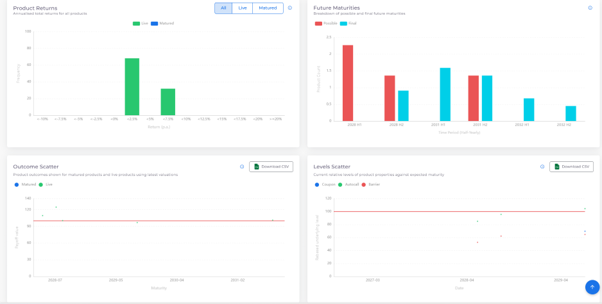
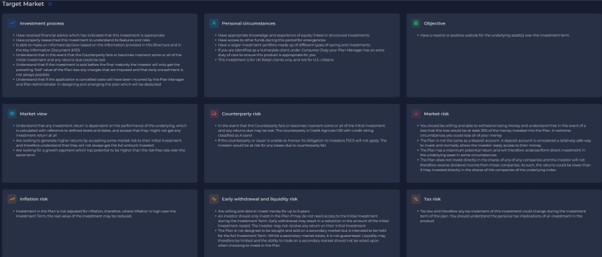
Evidencing client understanding can be challenging due to the nature of structured product features including barriers, conditional returns, counterparty risk and early withdrawal restrictions. As highlighted in the Structured Edge Target Market assessment, clients should understand that they could lose some or all of their initial investment if the counterparty defaults, and that early withdrawal may result in receiving less than the amount invested. Advisers should establish that clients understand the product’s mechanics, potential returns, downside risk and the possibility of underperforming compared with a direct investment. Structured Edge helps identify and showcase these risks through our new product life-cycle section, which uses our daily product valuations to show how products are performing and whether they are close to maturing.
Assessing product value requires consideration of whether the potential benefits justify the costs, risks and limitations. For example, structured products may offer enhanced returns or conditional income, but returns depend on the performance of underlying assets and may be capped. Investors may also forgo dividends and face the risk of inflation, reducing the real value of their investment. Advisers must therefore consider the overall product design, charges, counterparty strength, liquidity and potential outcomes rather than focusing solely on headline returns. This helps demonstrate that the product offers fair value relative to the benefits received.
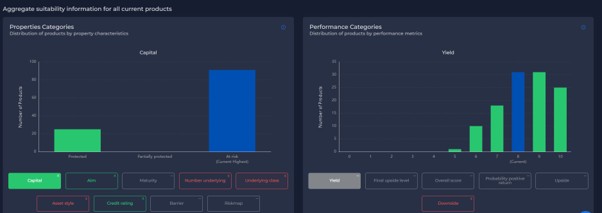
Reviewing suitability requires advisers to assess both the product provider’s target market and the individual client’s circumstances, including investment experience, financial resilience, access to emergency funds, investment objectives, risk tolerance and capacity for loss. Structured Edge supports this process through two key features. The first is our all-new Aggregate Suitability Information, which summarises product characteristics such as capital protection, maturity and credit ratings alongside performance metrics including yield, upside potential and overall score. The suitability by preference section, groups products into Growth and Income categories and whether they are suitable for a moderate, cautious or adventurous investor preference. These insights support informed product comparisons and suitability assessments. For example, a product requiring an investment commitment of up to six years may be unsuitable for a client who needs regular access to their capital.

Ultimately, Consumer Duty requires firms to demonstrate that are delivered throughout the investment timeline. That includes being able to evidence due diligence, such as why a product was recommended, which alternatives were considered and how it fits the client’s objectives, risk tolerance and capacity for loss. Structured Edge Premium can support this by bringing together product assessment, target market can support this by bringing together product assessment, target market analysis and suitability considerations, helping advisers make informed recommendations, maintain appropriate records and strengthen ongoing governance.
Ready to find out more about Structured Edge? Book a demo or get in touch with our team to find out how Structured Edge can support your organisation today. Visit www.structurededge.co.uk, email us at contact@structurededge.co.uk, or call us on +44 20 3384 1450 to get started.
Tags: Structured EdgeImage courtesy of: Cht Gsml / unsplash.com