Use of Prediction markets in Structured Products
The growth of prediction markets has created sufficient liquidity for structured product issuers to consider new types of products.
Prediction markets can trace their roots back many centuries and have links with financial markets and betting in a wider context. Twentieth-century advances included various academic works on knowledge, behavioural analysis and the efficient market hypothesis.
Prediction markets apply these principles to events instead of assets. The first modern application was the Iowa Electronic Markets (IEM), launched in 1988 by professors at University of Iowa for research and teaching purposes. Using small real-money stakes (capped at $500) and operating under a CFTC (US Commodity Futures Trading Commission) "no-action" letter, the IEM often beat major polls in forecasting US presidential vote shares. This was followed by several other niche attempts, such as Robin Hanson’s "idea futures" in the 1990s.
The first platform to be a true forerunner of today’s prediction market was Intrade, based in Ireland and launched in 2001. It became the best-known real-money market, covering elections, politics, and current events. It was particularly popular during the 2008 and 2012 US elections. Its operations faced severe setbacks when the US Commodity Futures Trading Commission (CFTC) filed a lawsuit against the company in November 2012 for offering unauthorized options contracts to US customers, leading to a ban on American users. Months later, it abruptly ceased all trading activity following the discovery of deep financial irregularities and cash-flow issues.
This attempt was followed by PredictIt, launched in 2014 by Victoria University of Wellington, New Zealand and operated under a CFTC no-action letter, with $850 per-contract caps. The CFTC withdrew the letter in 2022, but a federal appeals court later sided with PredictIt, allowing it to continue operating.
Today’s two major platforms followed. Polymarket launched in 2020 as a crypto-based platform. It also ran foul of the CFTC and was barred from serving US users, but remained hugely popular offshore. Kalshi, founded in 2018 by Tarek Mansour and Luana Lopes Lara, became the first CFTC-regulated exchange for event contracts. Following a legal dispute, a federal judge ruled in September 2024 that Kalshi could list US election contracts and the CFTC dropped its appeal in 2025.
Popularity for this concept accelerated with the 2024 US presidential election. Both platforms saw record volumes, and Polymarket's odds favouring Trump received extensive media attention, even though polls showed a closer race. The combination of politics, prediction and money-making, technology, social media and “democratisation” proved a potent combination. Polymarket subsequently bought the CFTC-licensed exchange QCX in July 2025 to re-enter the US, anxious not to miss out further on this boom.
It appears that these platforms are here to stay, although various concerns remain. For some events, insider trading is a serious possibility. Regulators such as the US CFTC are still grappling with their legal status and whether they constitute gambling, financial derivatives or forecasting tools. Liquidity can also be an issue as the popularity and the number of prediction opportunities increase.
In April 2026, structured product issuer Marex launched a one-year structured product paying a coupon of 7% if Nvidia remains the highest-valued company by market capitalisation in the S&P-500 one year from the start of the contract. Financial predictions are one of the most popular classes of events on platforms such as Polymarket and Kalshi. This represents a natural crossover with financial platforms and the ability to “day trade” event outcomes.
Marex will simply treat the product as having a digital-option-based payoff, financing a zero-coupon bond with its own credit in the usual way and then potentially hedging the event risk directly with a trading platform if a similar event is available in sufficient size.
Reverse-engineering the likely payoff profile, and depending on product currency, we would expect to see option value of around 4% available after fees. Since the product pays a 7% coupon, this implies a probability of approximately 60% of Nvidia will be the most valuable stock.
Polymarket currently shows predictions for the highest-valued stock in the S&P-500 by market capitalisation at the end of 2026, a period with less than three months to go. The current predictions for this event are 85% Nvidia, 10% Apple, 5% Alphabet and close to zero for any other stock. Since Nvidia is 20% above Apple and 37% above Alphabet by market capitalisation, these skewed probabilities are not surprising.
Whether a product of this kind can be wholly hedged through a public prediction market depends on the event popularity, the size of the structured product issuance and liquidity of the market. A further source of comfort for an issuer in relation to a financial event such as this is that other hedges could be used. For example, outperformance options of Nvidia against the next two stocks would provide a very good hedge for this product.
An issuer could even combine a prediction event with a more conventional payoff. For example, it could construct a product paying 4% if Nvidia is the highest-valued stock in the S&P-500, together with an independent coupon of 4% if Nvidia increases in value during the year. This second coupon is a straightforward digital payoff, meaning that the product would offer two routes to payment based on the success of Nvidia stock’s.
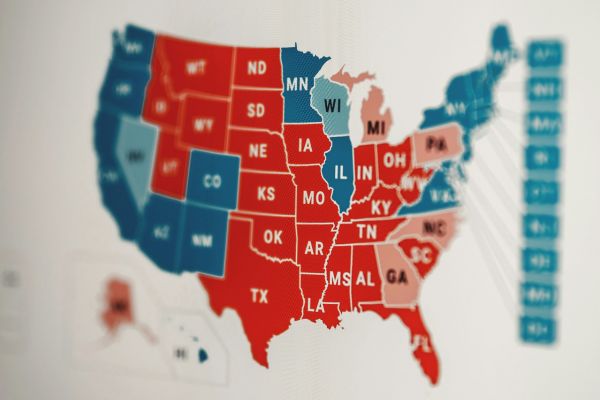
Polymarket and Kalshi also have some interesting bets on the US Presidential election in 2028 by party and candidate, offering opportunities for potential structured products outside the financial sector.
Prediction markets are still at an early stage of adoption and use in securitisation. Otala markets has also recently partnered with the Kalshi platform to produce securitised versions of these prediction events. The use of prediction markets remains niche and largely untested, but Marex, Otala and others have demonstrated that this may prove to be a fruitful area as platforms continue to develop, regulators accept such concepts and investors show interest.
Tags: Structured EdgeImage courtesy of: Clay Banks / unsplash.com